Risk assessment tool
Müller

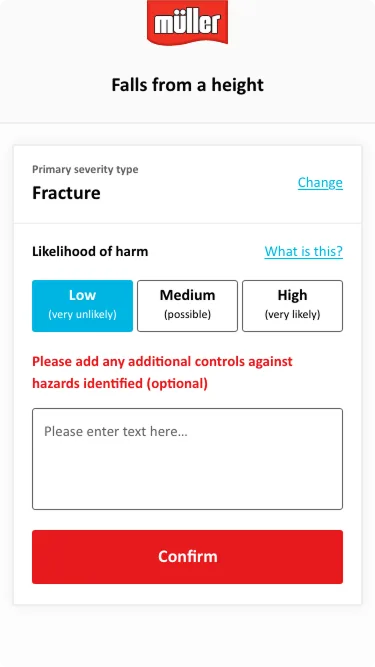
Risk assessment tool
The project set out to digitise Müller's Dynamic Risk Assessment form, previously completed on paper across the business.
The form is completed frequently and at the point of need, making speed and clarity essential. The paper process introduced risks of its own, forms could be lost, damaged or misread, and the information captured offered no route to reporting or analysis.
The following outlines the approach...
01
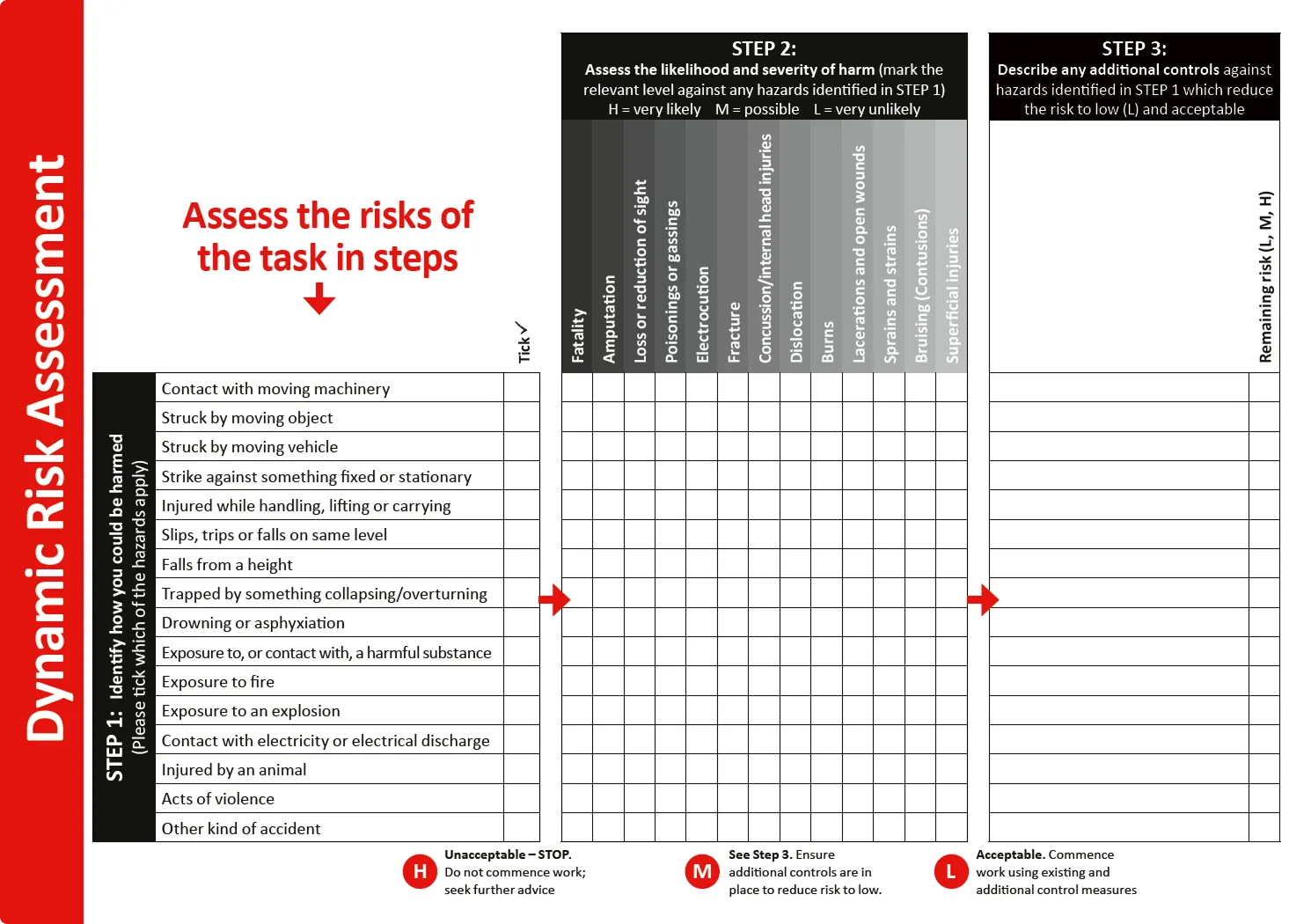
The existing paper form is shown above. A workshop was held with the teams responsible for completing these assessments, in order to identify the constraints of the current format.
While each issue was worth addressing, the absence of reporting proved the most significant. Without a means of analysing submissions, recurring risks could not be identified, and the assessments served only as a record rather than a source of insight.
02
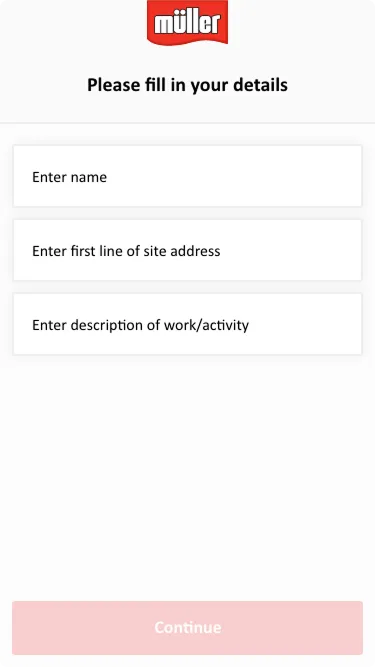
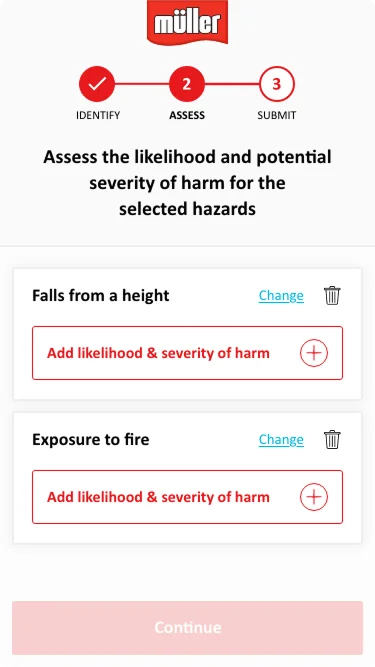
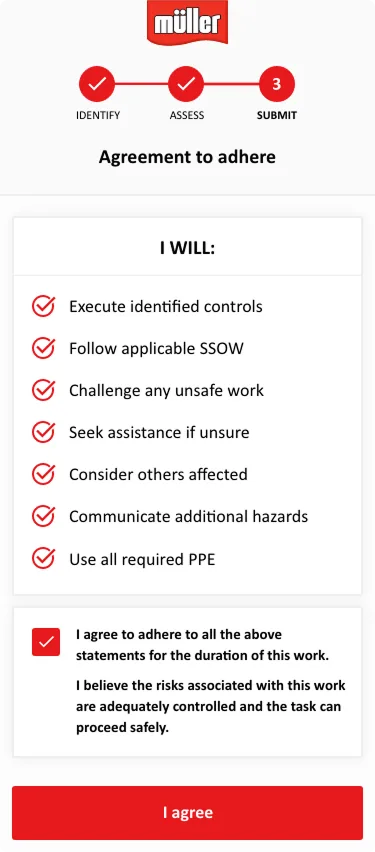
The proposed designs prioritised a frictionless experience, an essential consideration for an application of this type. Calls to action are surfaced only when required, and acknowledgement is requested for each entry to ensure that added items are not overlooked.
Content was kept closely aligned to the existing paper form, supporting a straightforward transition for users already familiar with the process.
03
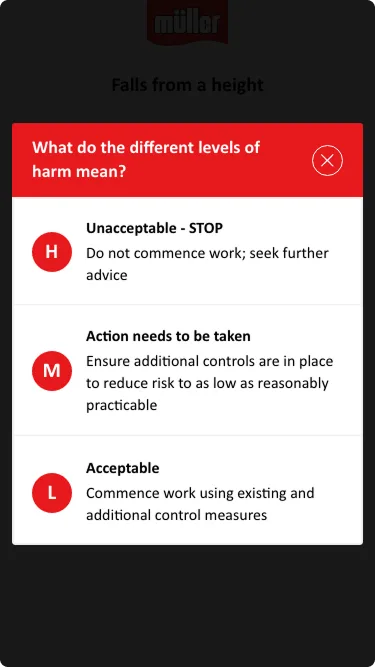
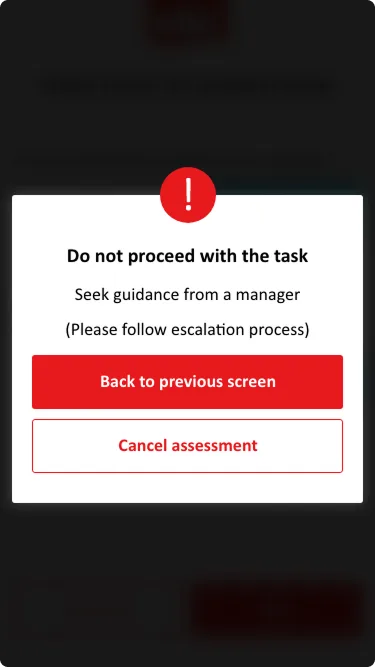
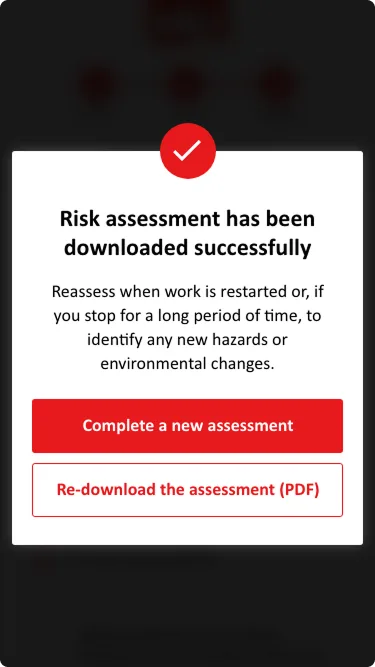
Highlighting warnings and their associated actions was the most critical element of the application. The digital format offers a distinct advantage here, a warning can take precedence over the current task, ensuring the appropriate guidance is followed before the user proceeds.
04
A key benefit of the digital format is the ability to report on usage and surface insights from submitted assessments. Recurring incident types can be identified and acted upon, informing where risk reduction efforts are best directed. This was not possible with the paper process.
The Results
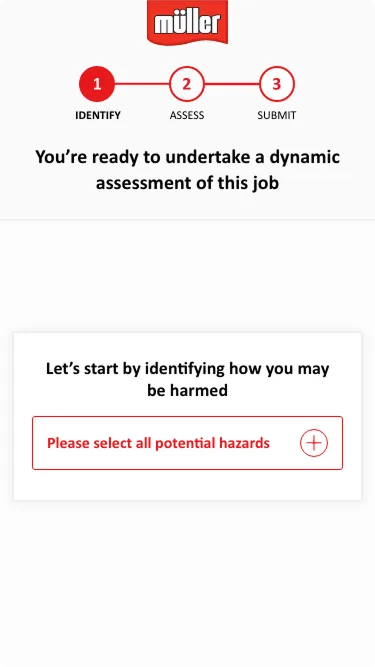
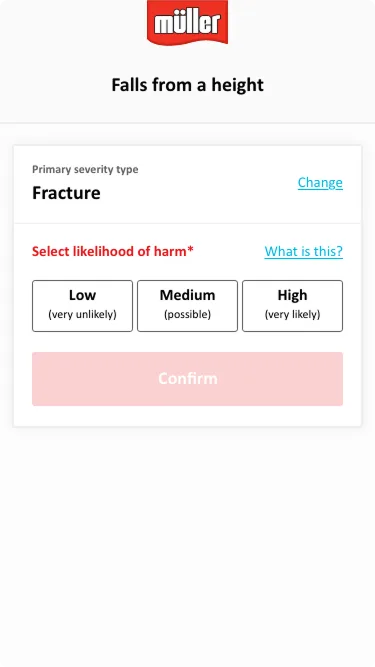
Speed, accuracy and reporting capability were the primary drivers for digitising the process. Beyond meeting these requirements, the application introduced further benefits, submissions are securely stored rather than at risk of loss or damage, legibility issues associated with handwriting are removed, and the printing requirement is eliminated entirely.