Enhancing Search
Search within People First was fragmented. Users wasted time navigating, often coming up without what they were looking for. This was an opportunity to rethink how people found what they needed and make the experience frictionless.
Let me show you the journey from discovery to the proposed idea…
01

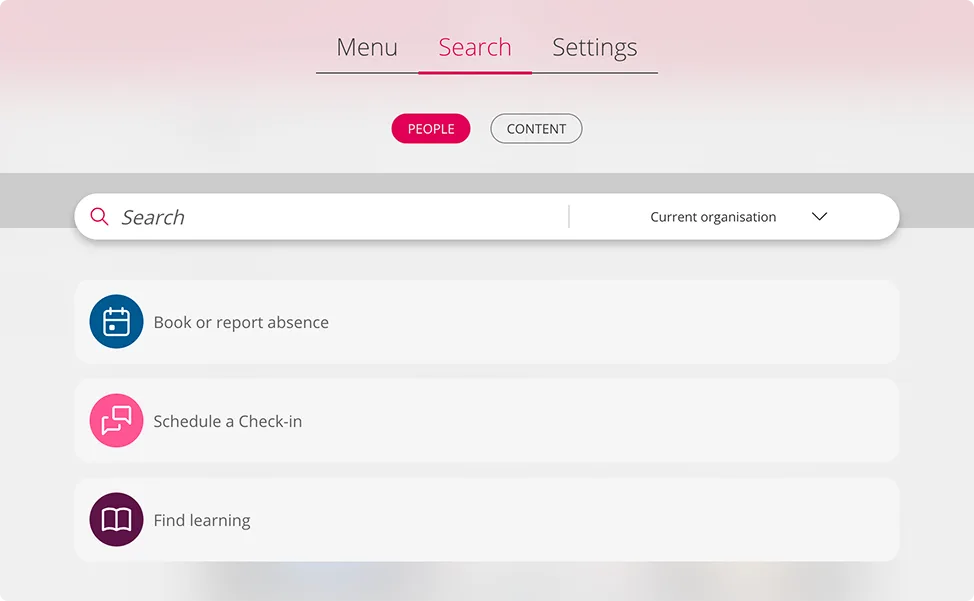
Search only covered people and content, and lived on its own page, finding anything meant leaving what you were working on.
Search history was not retained, so users had no way to revisit previously searched people or content, which was important for HR admins using a HR & Payroll platform.
02

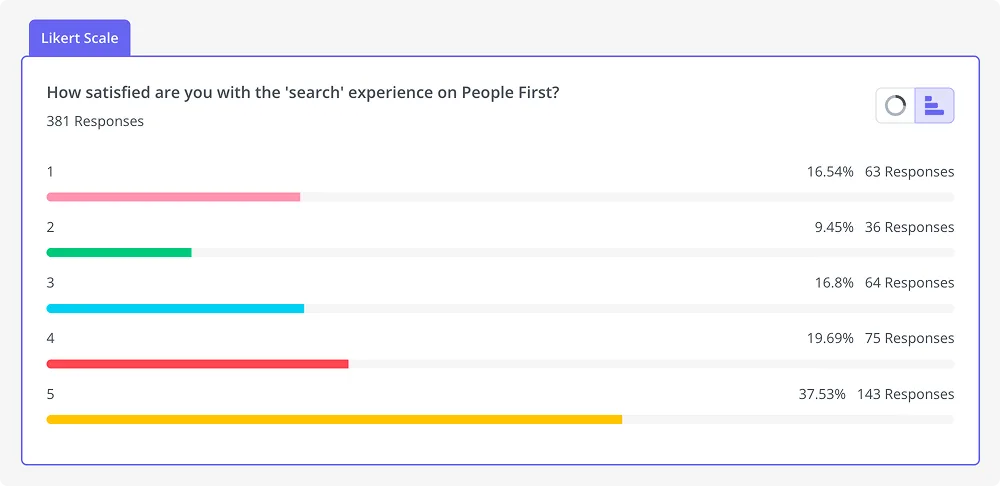
I surveyed our current People First customers. Of 381 respondents, only 57.2% were satisfied.

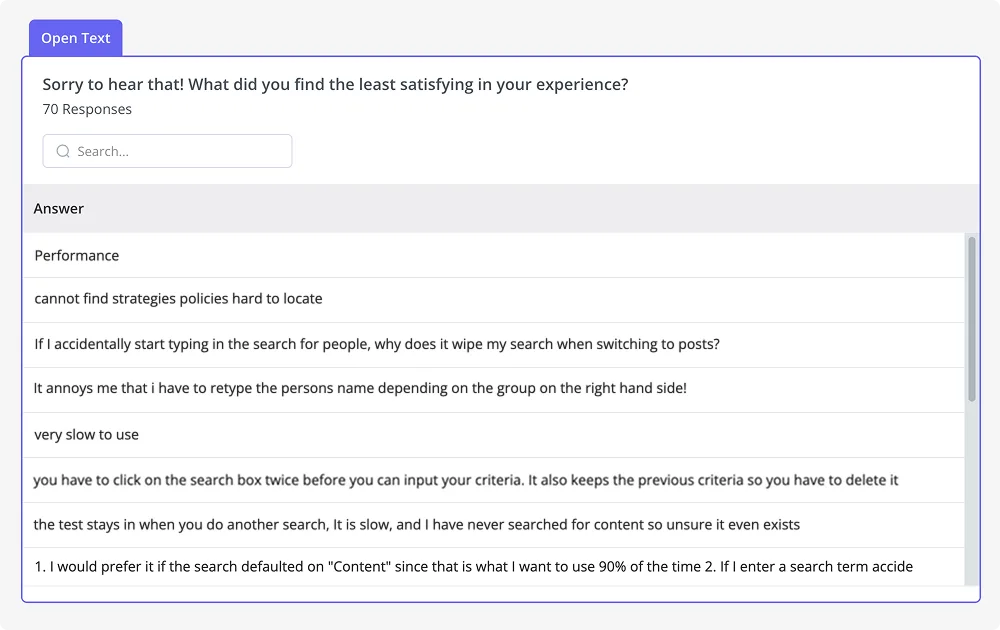
Here's a collection of feedback from respondents scoring 1 or 2. The dominant themes were performance, lack of search result retention, and having to jump between tabs to find anything.

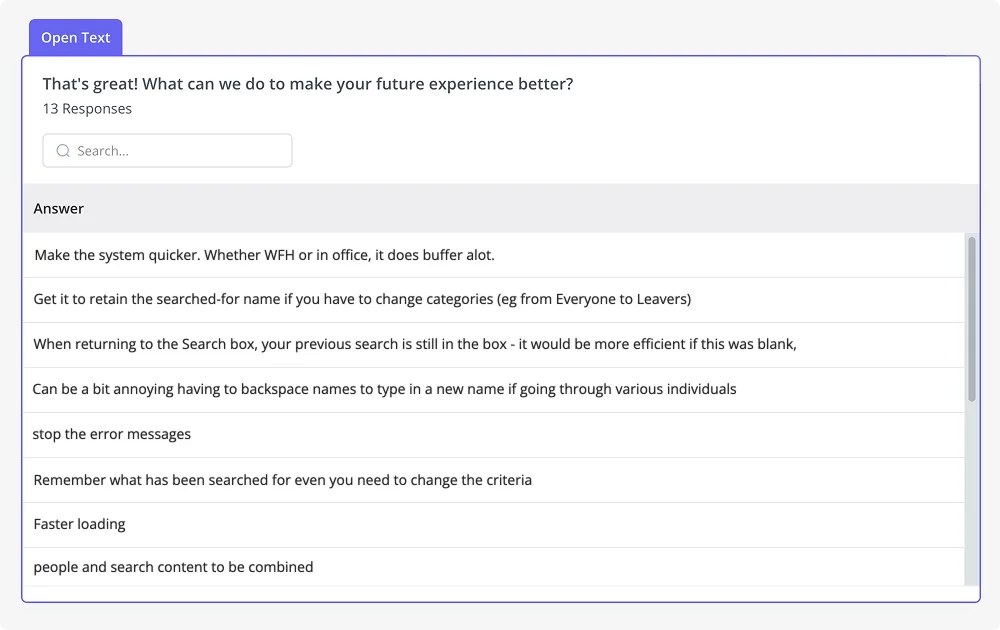
Here is the feedback from respondents who gave a more positive score. Notably, it raised themes similar to those cited by frustrated users.
03
Improve discoverability so users can reach search quickly.
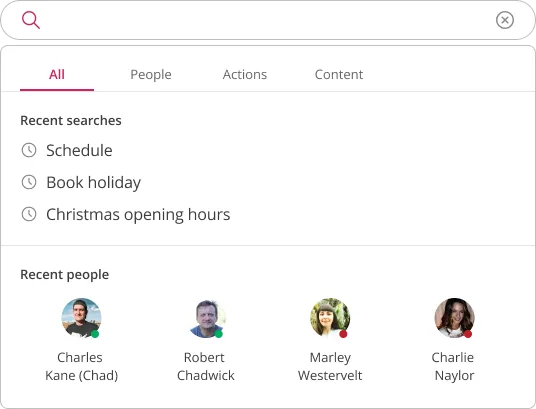
Retain previous searches to reduce repeat typing.
Improve the speed and performance of the search journey.
Preserve search context when switching between item types.
Expand searchable items beyond people and content.
Modernise the UI to match current search conventions.
Following the research, we consolidated our findings into 6 actionable items. These formed part of the acceptance criteria to make sure the final experience reflects what users actually told us.
04

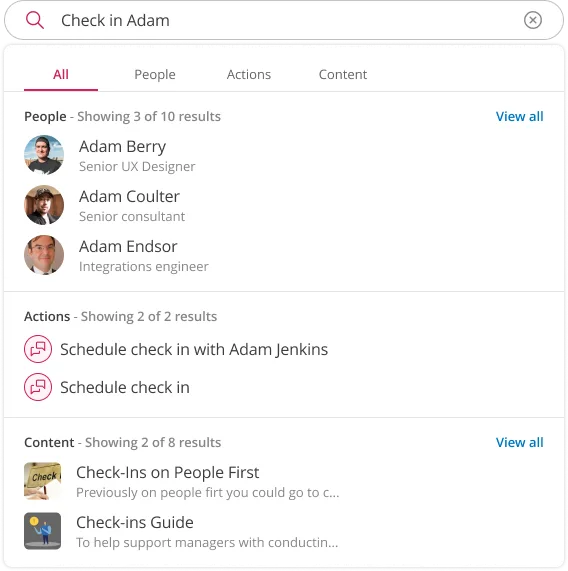
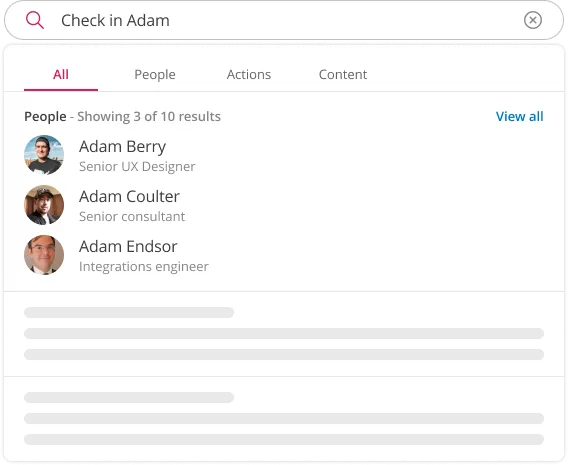
Above is the refined search concept, ready to share with customers and internal users to validate the new approach.
The key amendments were as follows. A single input field now supports searching across a wider range of items, not only people and content. Results are grouped by category, helping users refine larger result sets and providing context for each item. Search is also retained in-page, removing the need for a dedicated search page.

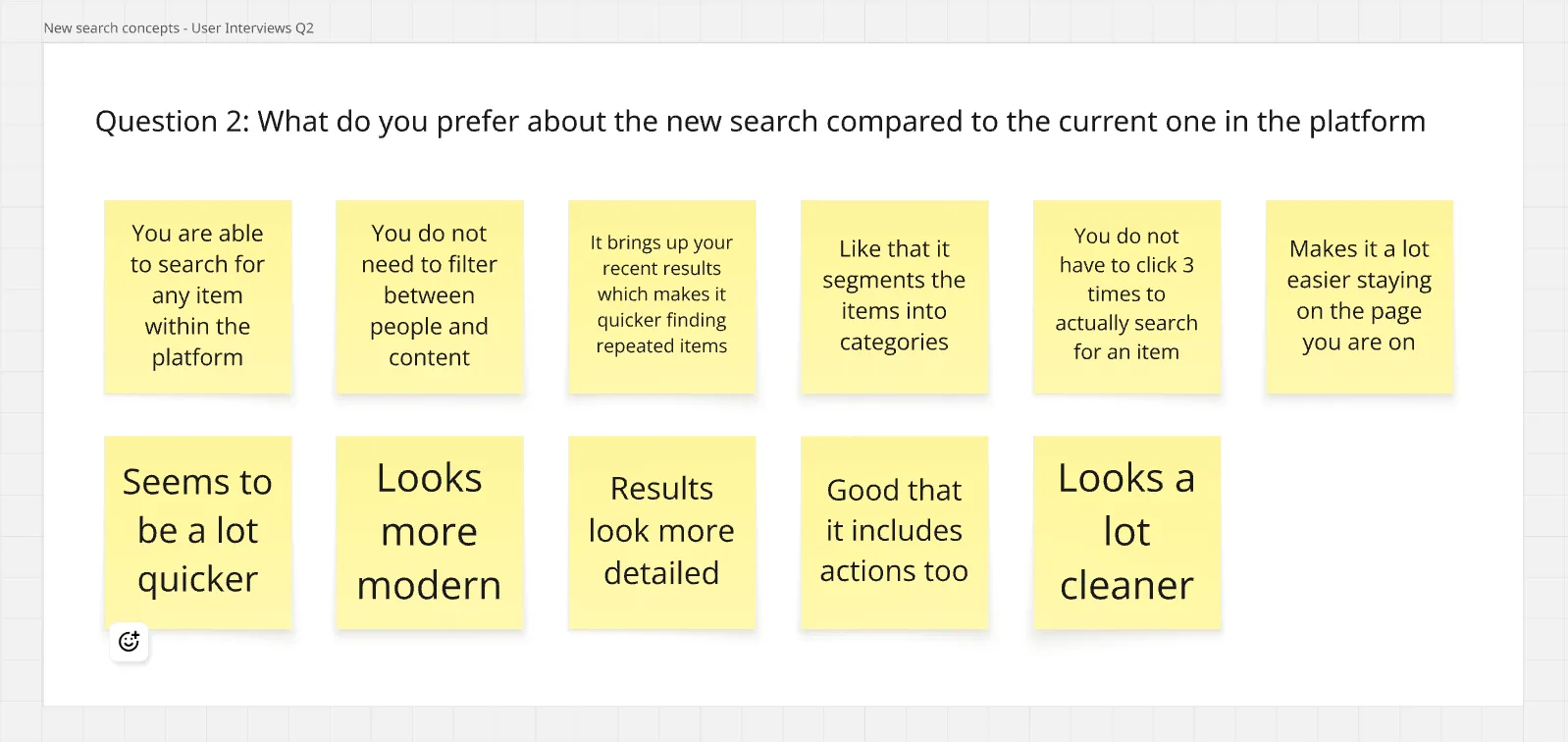
The following feedback was gathered during the user testing sessions. Responses were markedly more positive, and the concerns identified in the original research had been resolved.
05

The biggest challenge wasn't the UI redesign or the new search flow, it was performance, and how the new requirements would affect it.
Several workshops identified loading the items as the main bottleneck. We solved this by delivering items in phases, using skeleton states to reassure users that the remaining results were on their way, alongside optimisations to how we query results, including caching and API improvements.
The Results

The redeveloped search has been built in experimental mode, so it isn't live yet, but early customer feedback has been overwhelmingly positive. Once it launches, we plan to run another CSAT survey to measure the uplift. With the new foundations in place, we also expect to resolve future pain points much faster.